Best Museums in El Salvador to Visit with Kids
El Salvador has a growing museum scene, and more importantly, many of the museums in El Salvador are genuinely fun and interesting for kids. This guide covers the best museums in El Salvador to visit with children, with up-to-date hours, prices, and what makes each one worth the trip. New to El Salvador? Start with our guide on Is El Salvador Safe for Kids and Families?
1. Museo Tin Marín (Children’s Museum)
Website: tinmarin.org
Hours: Tuesday–Sunday, 9:00 a.m. – 5:00 p.m. (closed Mondays)
Admission: $3.50 per person (They also have packages available which can include special exhibits or a planetarium visit)
📍 View on Google Maps – Tin Marín Children’s Museum
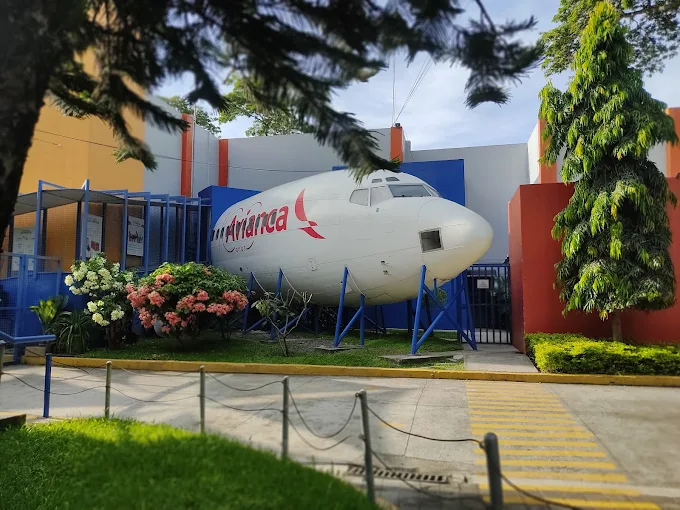
Tin Marín is the most interactive children’s museum in El Salvador and a great way to spend the day for families visiting San Salvador. Kids can board a real plane, board a pirate ship, a train or go inside a volcano, visit the mini market, or explore science exhibits. The whole museum is designed around hands-on play and learning. Located right next to Parque Cuscatlán, it’s easily one of the best half-day outings for young children in the city. Weekdays are calmer; weekends fill up with local families. It has 32 permanant exhibits to explore so plan to arrive early and budget at least 2–3 hours to see everything. They do have a small parking lot in front, or you can look for free street parking around Parque Cuscatlán and walk to the museum from there.
2. Museo Nacional de Aviación (National Aviation Museum)
Website: fas.gob.sv/museo
Hours: Wednesday–Sunday, 9:00 a.m. – 12:00 p.m. and 2:00 p.m. – 5:00 p.m.
Admission: $1 per person; children under 7 and seniors free
📍 View on Google Maps – Museo Nacional de Aviación
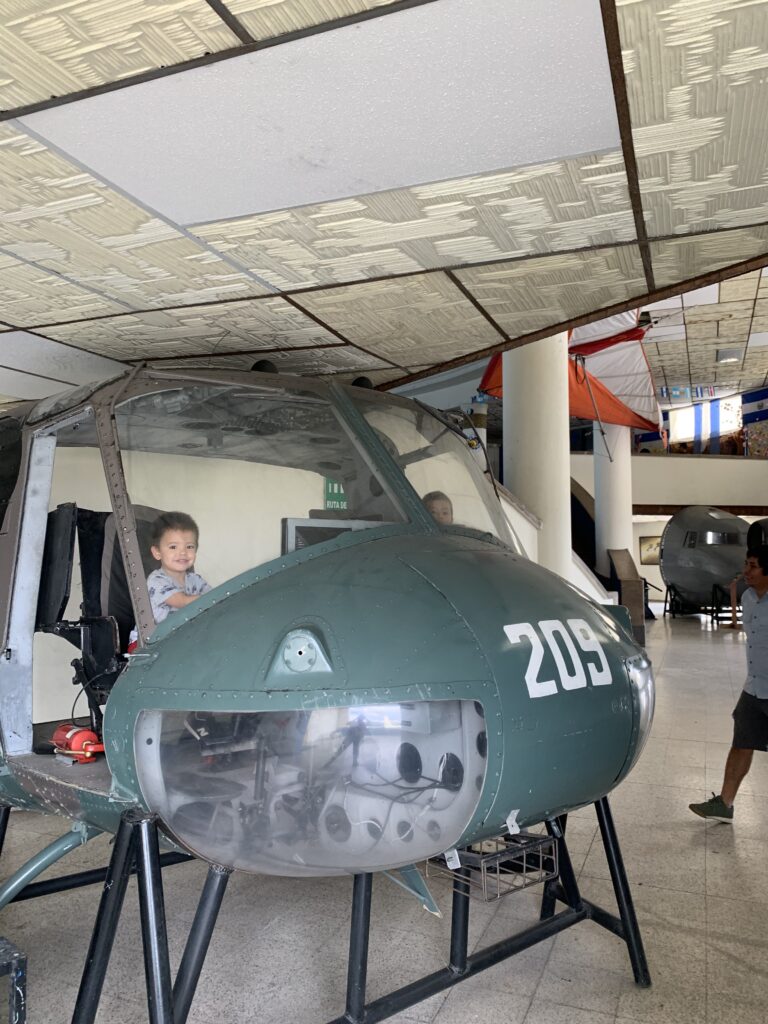
Plane-loving kids will love it here. Located at the old Ilopango International Airport, the country’s original commercial airport, this museum covers 91 years of Salvadoran aviation history: military, civil, and commercial. The outdoor area features real restored aircraft including combat planes, transport planes, training planes, and helicopters. Inside, exhibits trace the history of the first Salvadoran pilots, the Fútbol War against Honduras, and the civil conflict of the 1980s. When you arrive soldiers meet you at the gate, just tell them you are going to the museum and they will assign you a guide to walk you through. Kids are probably less interested in all the historical exhibits, but at the end of the tour on the second floor you are able to climb into the cock-pit of three different air crafts, this is the major highlight! From the second floor sometimes you can even see private airplanes coming and going on the runway below. At just $1 a person, it’s a great cheap outing in greater San Salvador. Parking is free!
👉 Read our full guide to the Museo de Aviación →
3. Museo Militar / Centro de Historia Militar “Cuartel El Zapote”
Website: centrodehistoriamilitar.mil.sv
Hours: Monday–Sunday, 8:00 a.m. – 5:00 p.m.
Admission: Free!
Parking: Free!
📍 View on Google Maps – Museo Militar – Cuartel El Zapote
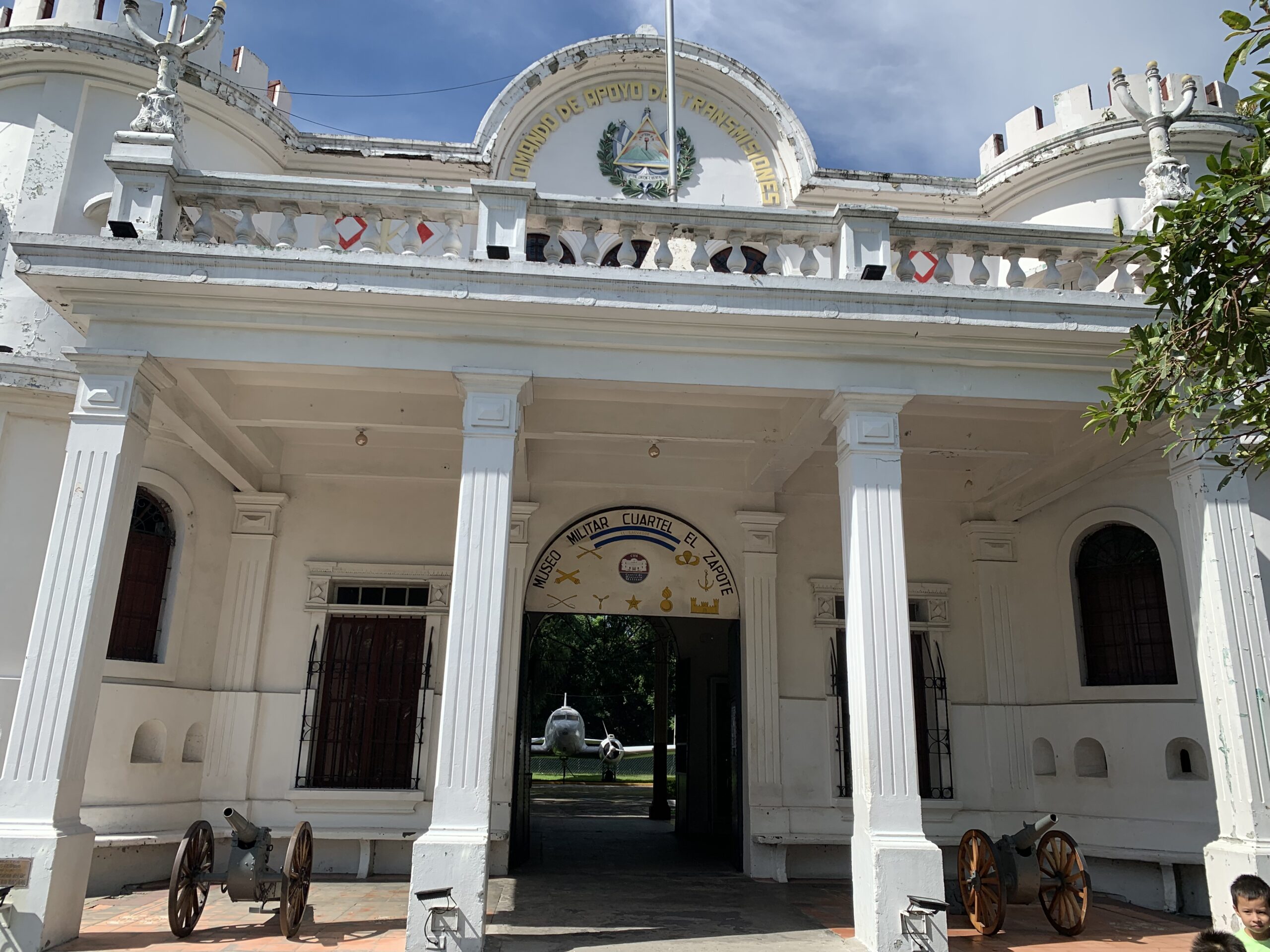
Housed in the historic Cuartel El Zapote, a barracks building dating to the 1860s, the Military Museum is one of the best free family outings in San Salvador. With 12 exhibition halls, the museum takes visitors through El Salvador’s military history chronologically, from independence to the present day. Highlights include real tanks, cannons, airplanes, helicopters, historic uniforms, the Papamóvil used by Pope John Paul II during his visits to El Salvador, and copies of the Declaration of Independence and the Peace Accords of Chapultepec. A recently added Sala Lúdica (play room) is specifically designed for younger children. Note: if you arrive and find this area is closed, ask one of the guards at the fornt and they will open it for you.
👉 Read our full guide to the Museo Militar →
4. MUNA – Museo Nacional de Antropología Dr. David J. Guzmán
Website: cultura.gob.sv
Hours: Tuesday–Sunday, 9:00 a.m. – 5:00 p.m. (closed Mondays)
Admission: $3 nationals; $5 foreigners; free for children and students with ID
📍 View on Google Maps – MUNA – Museo Nacional de Antropología
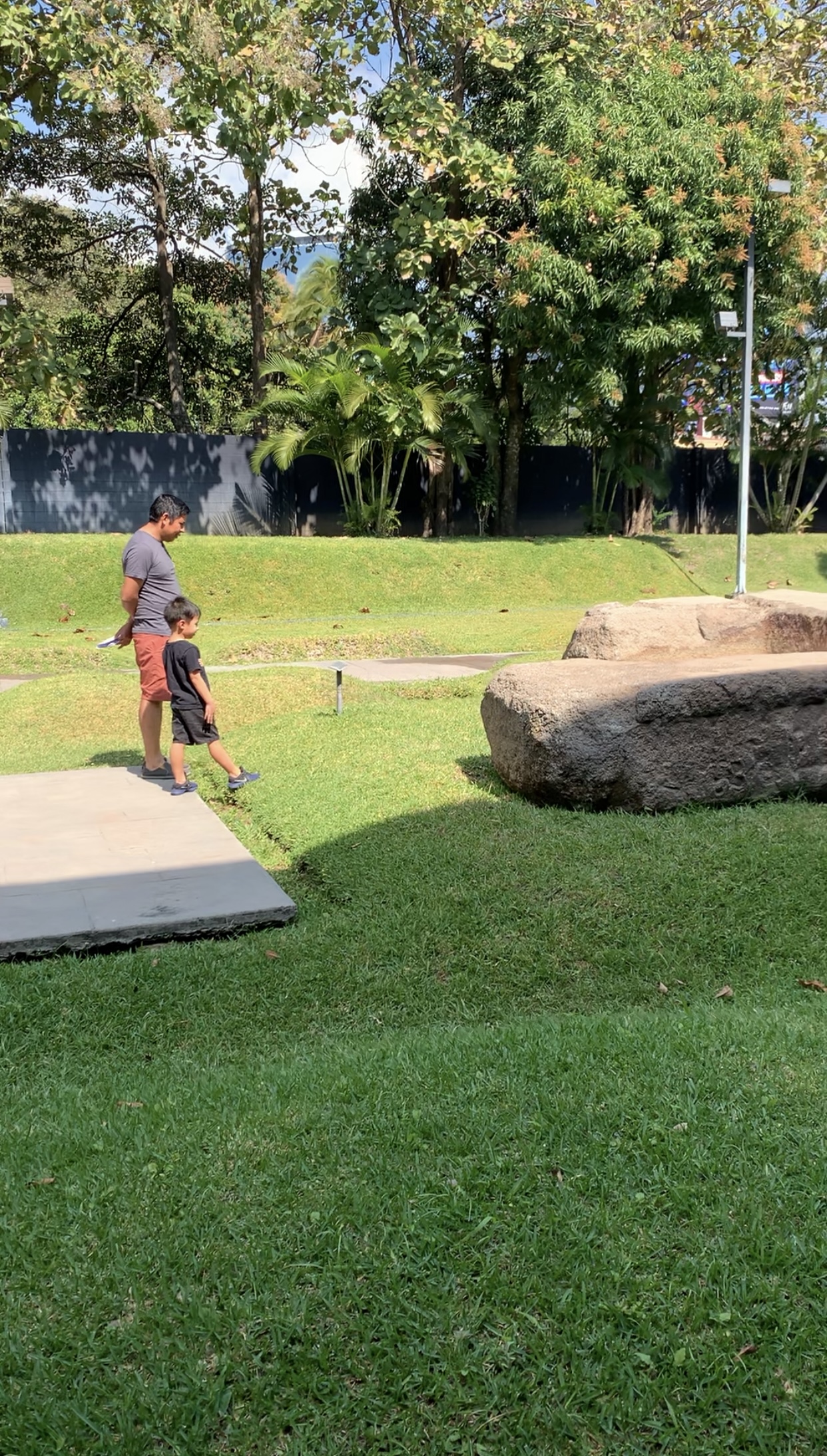
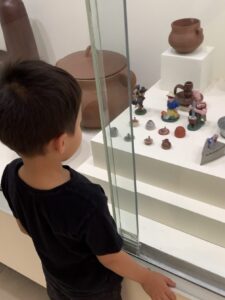
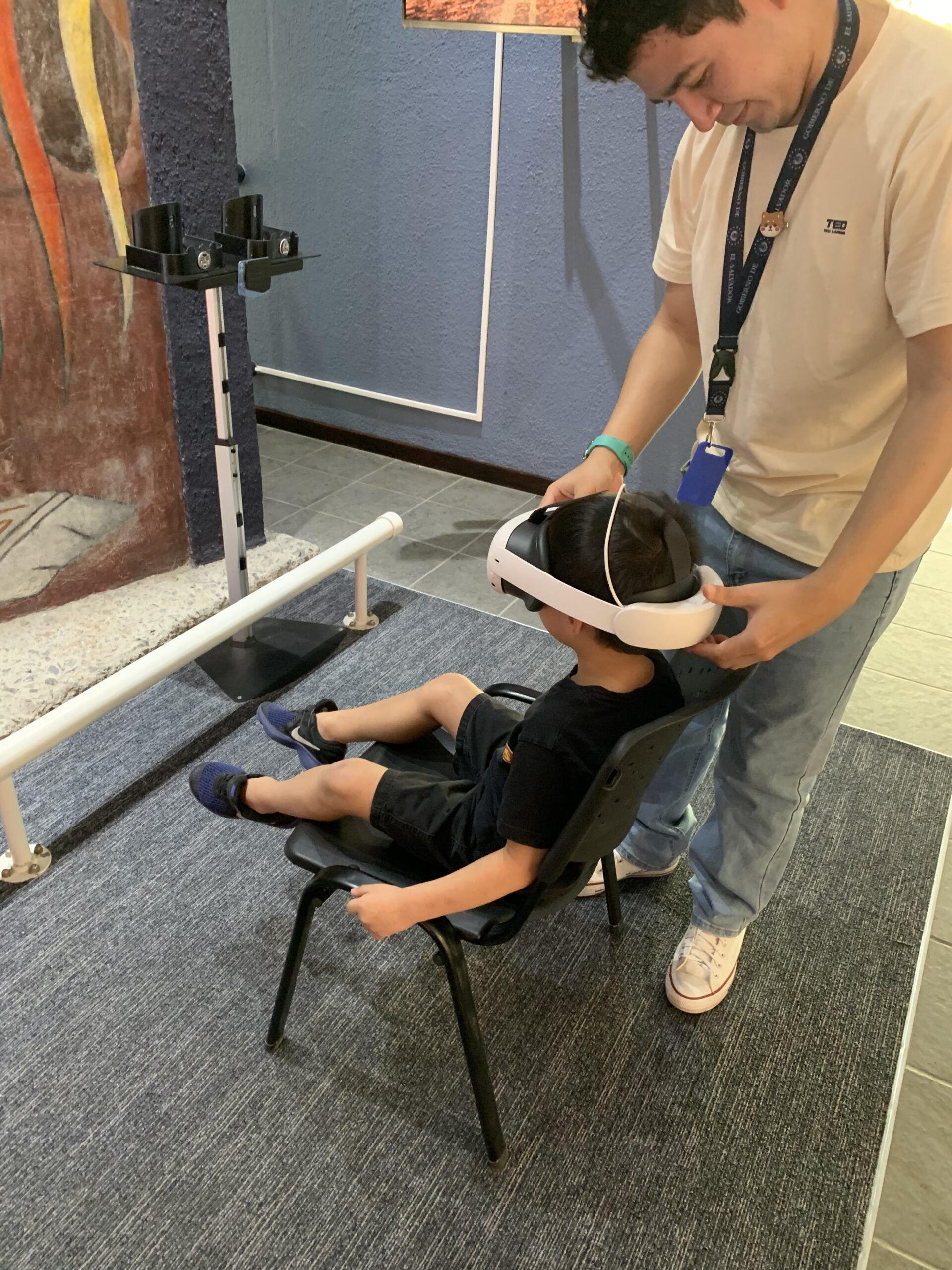
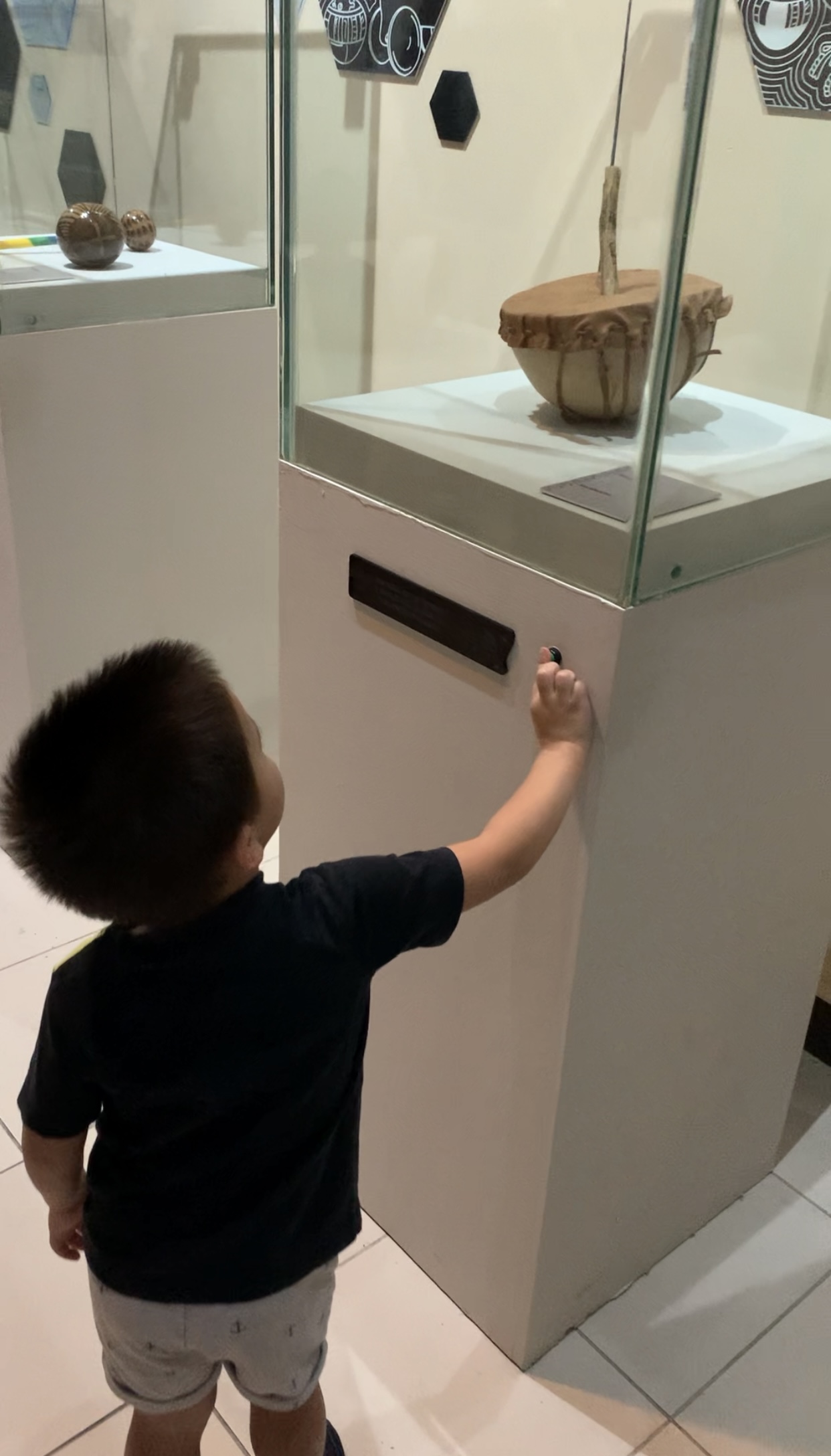
The MUNA is El Salvador’s flagship anthropology museum and one of the most important cultural institutions in Central America. Located in the Zona Rosa, its modern exhibits cover ancient indigenous tools, weapons, pottery, ceramics, and textiles — offering kids a tangible window into the lives of the people who lived here long before the Spanish arrived. Exhibits are labeled in both Spanish and English. It is not an intensely interactive museum, but older kids who enjoy history and archaeology will find plenty to explore, and the building and grounds are beautiful. Pair it with a visit to a nearby park or restaurant to round out the day.
👉 Read our full guide to MUNA →
5. MARTE – Museo de Arte de El Salvador
Website: museomarte.org
Hours: Thursday–Sunday, 10:00 a.m. – 4:00 p.m.; Mondays, 6:00 p.m. – 7:30 p.m.
Admission: $1 nationals; $5 foreigners; free for students with valid ID, minors, seniors, and all visitors on Sundays. Free parking.
📍 View on Google Maps – MARTE – Museo de Arte de El Salvador
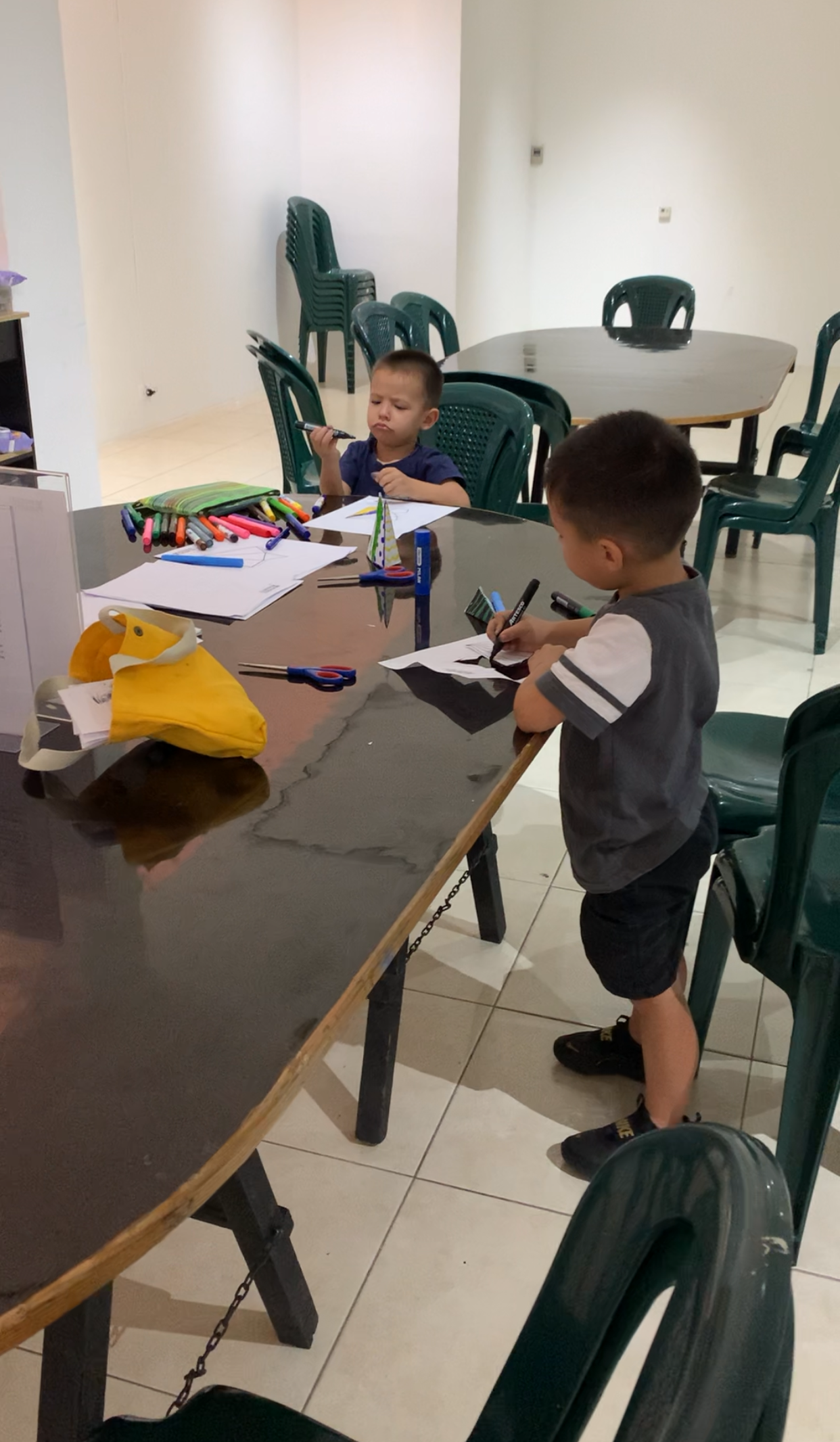
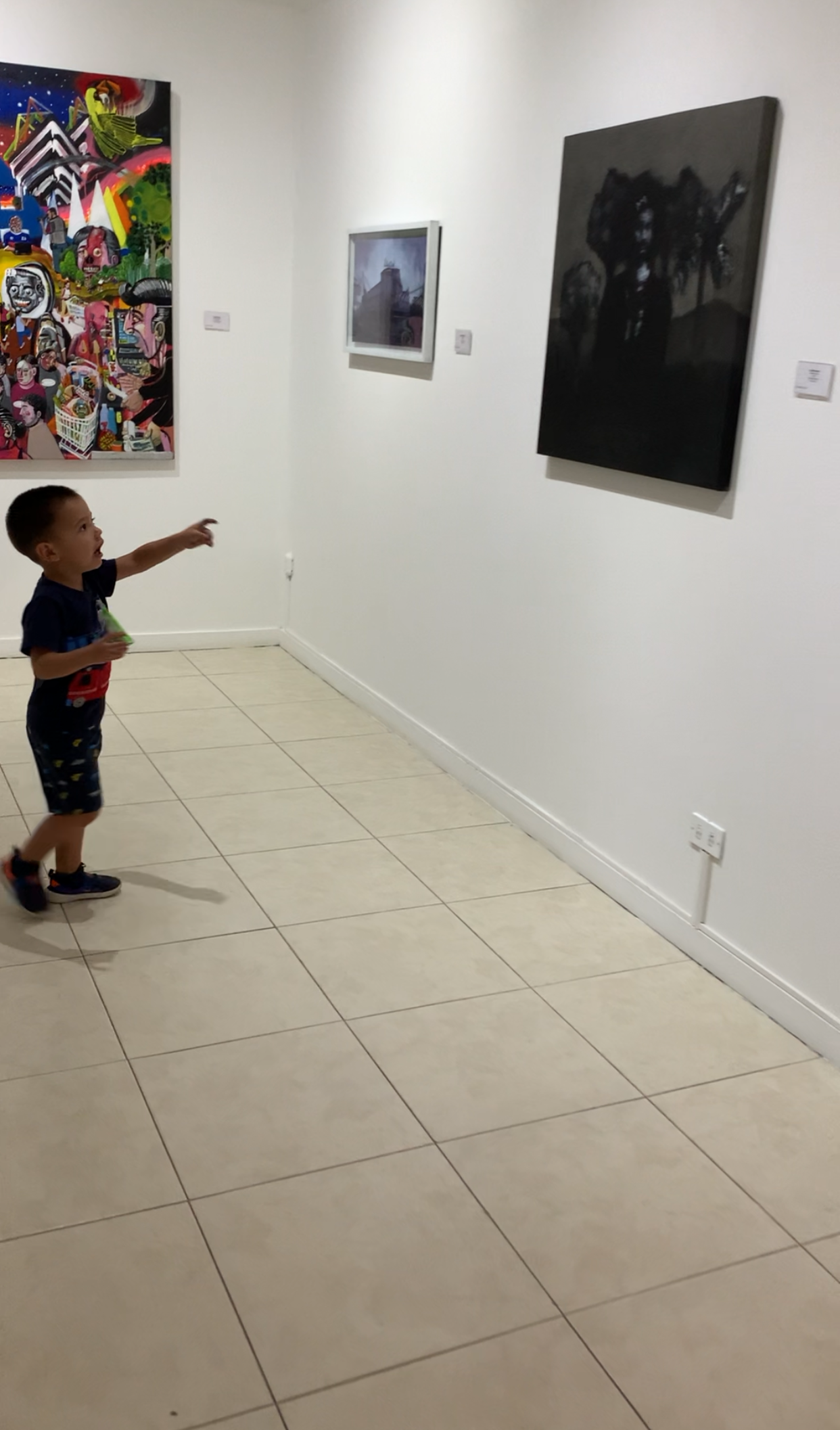
MARTE is El Salvador’s fine art museum and a wonderful place to introduce children to Salvadoran art and visual culture. The permanent collection spans from the mid-19th century to contemporary works, and rotating temporary exhibitions bring in both national and international artists. The museum has a strong educational program with guided school visits, teachers’ workshops, and hands-on art workshops for children. There is a room with a few different art projects that kids can do to make their own masterpiece! Some art does have more mature themes, so be aware of that. In general my kids didn’t stay long to look in detail at each exhibit, but did enjoy a quick walkthrough and a long art session. Sundays are free, which makes it a great option for budget-conscious families.
6. MUHNES – Museo de Historia Natural de El Salvador (Parque Saburo Hirao)
Website: cultura.gob.sv/muhnes
Hours: Wednesday–Sunday, 9:00 a.m. – 4:00 p.m.
Admission: $1 nationals; $3 foreign residents; $5 non-residents; free for students with valid ID, persons with disabilities, and seniors (There may be a $1 parking fee!)
📍 View on Google Maps – MUHNES – Parque Saburo Hirao
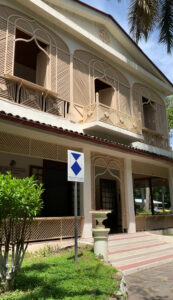
The Natural History Museum is nestled inside the lush Parque Saburo Hirao, a beautiful green park with lots of play areas that is in itself worth the trip. The museum occupies the original hacienda house of the former Finca La Gloria and houses three permanent exhibition halls covering geology, paleontology, and biology. Kids are especially fascinated by the fossil collection and the outdoor Prehistoric Garden, where life-size sculptures of the megafauna that once roamed El Salvador. There is a giant ground sloth, mastodon, and others, on the park grounds. On weekends museum staff often have activties or art projects for families to do. Pack a picnic; the park has open green areas and playground equipment too. If you come with a child under 6 also ask about the Bebeteca, a young children’s indoor play area with books, toys and activities just for them!
👉 Read our full guide to Parque Saburo Hirao →
7. Joya de Cerén Archaeological Site & Museum
Website: fundar.org.sv
Hours: Tuesday–Sunday, 9:00 a.m. – 4:00 p.m. (closed Mondays)
Admission: $1.00 Salvadorans, $3.00 other Central Americans, $7 resident foreigners, $10 non-resident foreigners.(free entry for Salvadoran children under 12) $1 parking fee.
📍 View on Google Maps – Joya de Cerén Archaeological Site
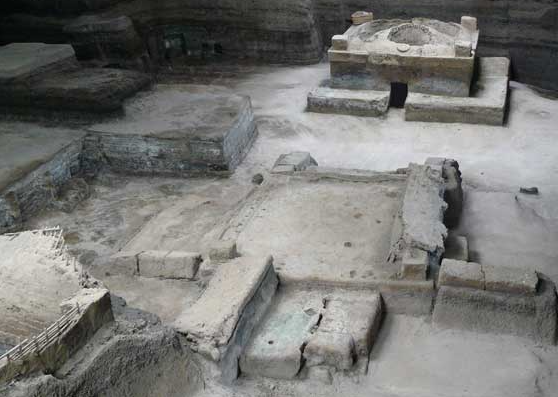
Often called the “Pompeii of the Americas,” Joya de Cerén is El Salvador’s only UNESCO World Heritage Site and a fascinating stop for curious kids. A Mayan farming village was buried under volcanic ash around 600 AD, preserving not temples or royal tombs, but the everyday world: homes, a community sauna, a shaman’s house, sleeping platforms, and farming tools. The on-site museum was recently renovated with modernized displays in Spanish, English, and French. A guided tour takes about 45–60 minutes and is well worth it. Older kids who can appreciate the story of what happened here tend to find it genuinely interesting. Located about 40 km northwest of San Salvador near San Juan Opico, it pairs naturally with a stop at the nearby San Andrés archaeological site.
8. Tazumal Archaeological Park & Museum
Website: fundar.org.sv
Hours: Tuesday–Sunday, 9:00 a.m. – 4:00 p.m. (closed Mondays)
Admission: $1 nationals; $3 Central Americans and foreign residents; $5 non-residents; free for Salvadoran children under 12, students with ID, seniors, and persons with disabilities. $1 parking fee.
📍 View on Google Maps – Parque Arqueológico Tazumal
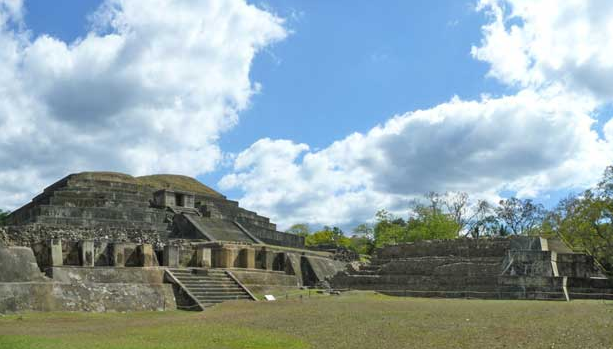
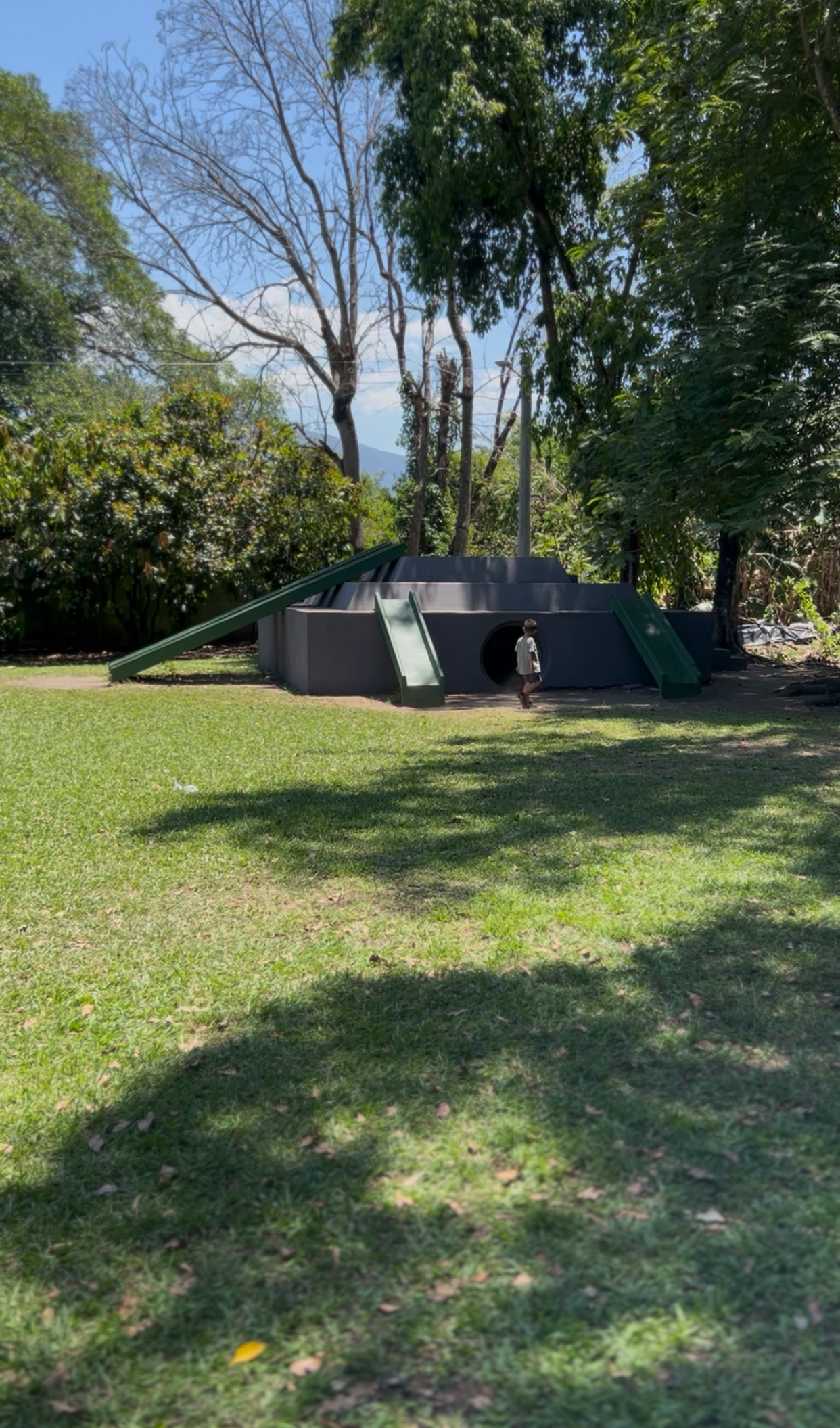
Tazumal is the largest Mayan ruin in El Salvador, located in Chalchuapa near Santa Ana, about 75 km from San Salvador. The site includes a large main pyramid, a ball court, and several smaller structures. Visitors are allowed to walk up and around a few of the structures still. The name Tazumal translates roughly to “pyramid where the victims were burned” in K’iche’ Maya, which never fails to grab kids’ attention. There is a small on-site museum with artifacts excavated from the site. The grounds are beautifully maintained and guided tours are available at the ticket kiosk. This site is also has the family friendly seal which means it has accesibility features, and a lactation room. This is a great destination to combine with a visit to nearby Lake Coatepeque.
9. San Andrés Archaeological Park & Museum
Website: fundar.org.sv
Hours: Tuesday–Sunday, 9:00 a.m. – 4:00 p.m. (closed Mondays)
Admission: $1 nationals; $3 Central Americans and foreign residents; $5 non-residents; free for children under 12, students with ID, seniors, and persons with disabilities
📍 View on Google Maps – Parque Arqueológico San Andrés
Note: the museum has been undergoing renovations — confirm it is open before visiting.
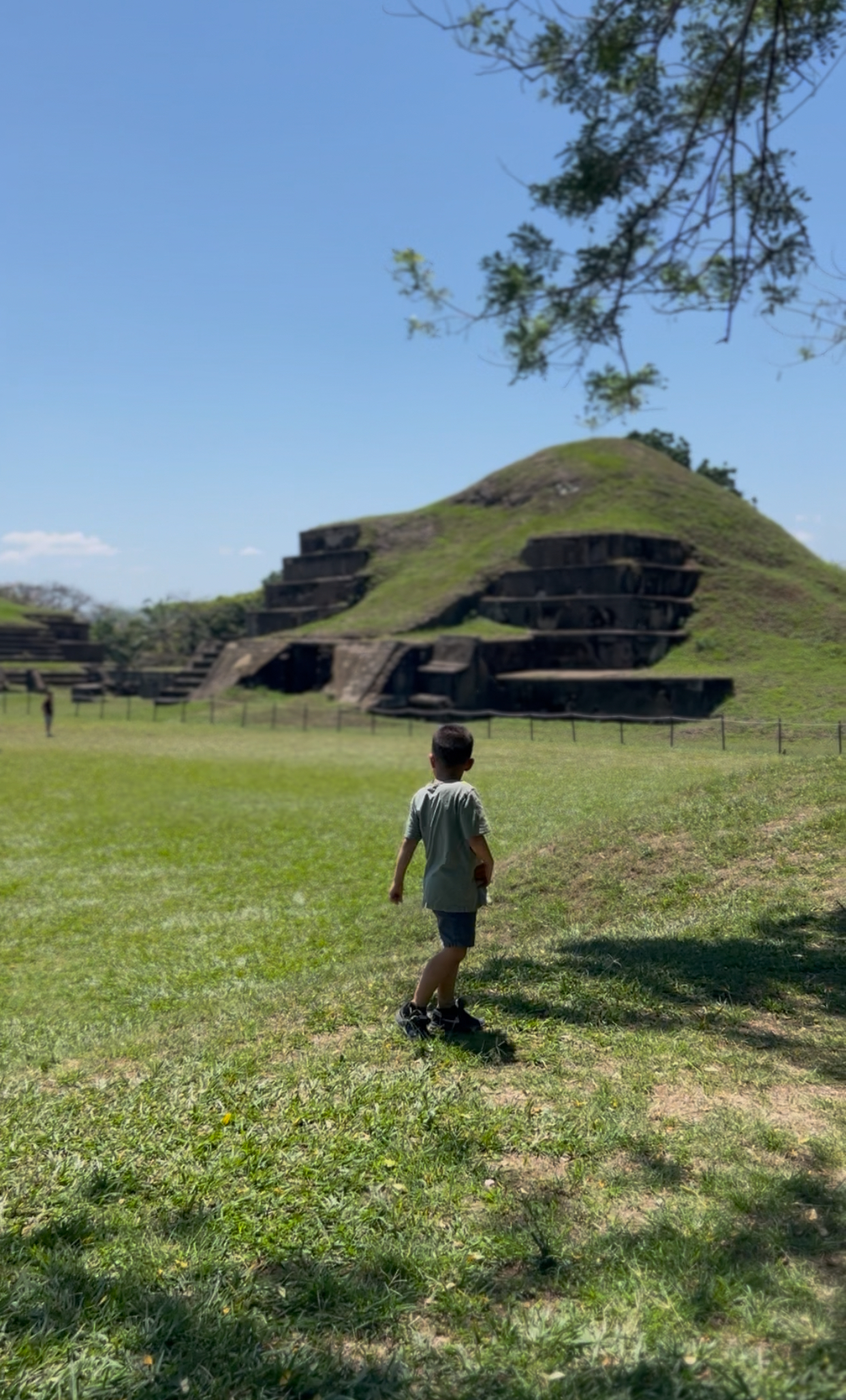
San Andrés is one of the largest pre-Hispanic ceremonial centers in El Salvador, located about 37 km from San Salvador in the fertile Zapotitán Valley — just a few kilometers from Joya de Cerén. At its peak between 600–900 AD, it served as a regional Maya capital. The site features an impressive acropolis with pyramids, plazas, as well as the uniquely shaped bell pyramid (“La Campana”). There is a small entrance museum where visitors can walk through before reaching the ruins. Walking among the pyramids and open plazas has its own peaceful, atmospheric appeal, and the site is easily combined with Joya de Cerén on the same day. Don´t forget your sunscreen!
10. Museo del Ferrocarril – Sonsonate (Train Museum)
Hours: Wednesday–Friday, 10:00 a.m. – 6:00 p.m.; Saturday–Sunday, 1:00 p.m. – 9:00 p.m. (closed Mondays and Tuesdays)
Admission: Free
📍 View on Google Maps – Museo del Ferrocarril Sonsonate
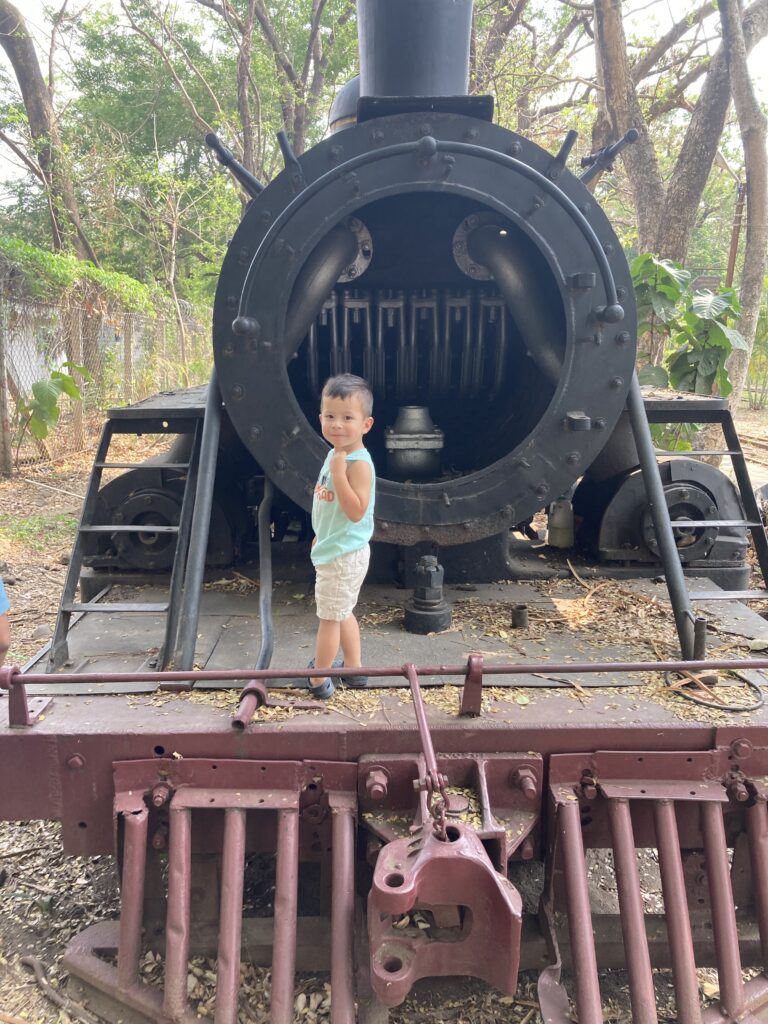
Trains are exciting no matter how old you are, and the Railway Museum in Sonsonate delivers. Located in what was El Salvador’s very first railway station, built in 1882, the year the country’s first locomotive arrived from England, the museum tells the full story of Salvadoran rail history from the first steam engines through the golden years and eventual closure in 2012. The outdoor exhibits include original locomotives, wagons, large water tanks used to power steam trains, machinery, and historic photographs. It is a bit run down, but if you are in town it can be a nice stretch break to walk around and peek at the old trains. (Tip: put on bug spray before you walk around!) Free admission makes this a nice add-on when visiting Sonsonate, Nahuizalco, or the Ruta de las Flores.
Tips for Visiting Museums in El Salvador with Kids
- Best days: Weekday visits to the most popular museums in El Salvador (Tin Marín, MUNA) tend to be much less crowded. Archaeological sites are calmer in the mornings.
- Rainy season: Most museums in El Salvador are fully indoors or have covered areas — they make great rainy day options from May through October.
- Combo trips: Joya de Cerén and San Andrés are just 5 km apart — an easy back-to-back. Tazumal pairs well with Lake Coatepeque. The Museo de Aviación is near Ilopango Lake, check out the Apulo Recreative Park!
- Bring cash: Many smaller museums in El Salvador and some archaeological sites don’t accept cards.
- Ages: Tin Marín and Parque Saburo Hirao/MUHNES are best for younger kids. The archaeological sites and MUNA tend to land better with school-age children and older.
- Need help planning? Check out our 5-Day El Salvador Family Itinerary for a full trip plan, or book a personalized trip planning consultation to get expert advice for your family’s visit.
No responses yet